Dieser Artikel ist derzeit nur auf Englisch verfügbar.
Next.js vs React: Choosing the Right Tech Stack for Scalable Web Apps
Understanding the Core Difference
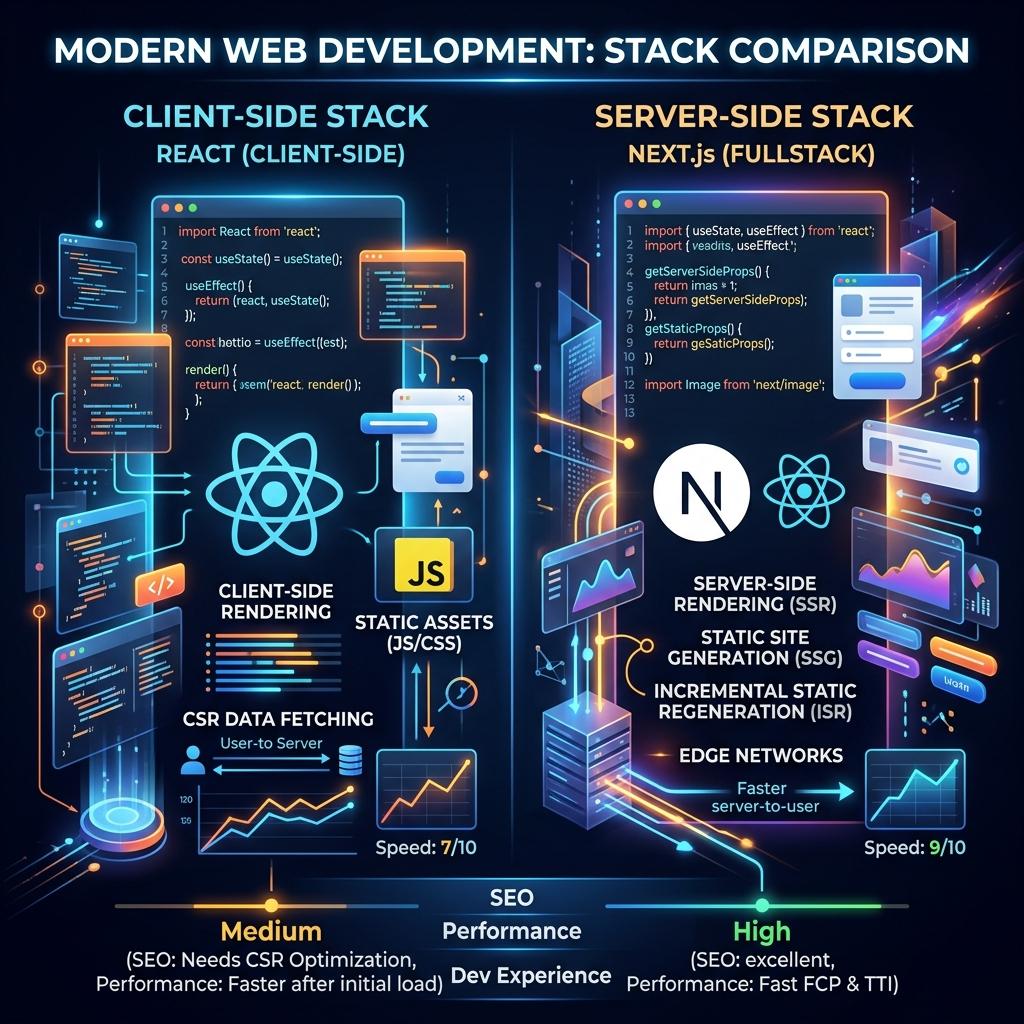
React is a powerful JavaScript library for building user interfaces, primarily focused on rendering components in the browser (Client-Side Rendering). Next.js, on the other hand, is a full-fledged framework built on top of React that provides additional features like Server-Side Rendering (SSR), Static Site Generation (SSG), and routing out of the box.
When to Choose React
React is an excellent choice for highly interactive applications where SEO is not a primary concern, such as internal dashboards, admin panels, and Single Page Applications (SPAs) behind a login screen. It gives developers complete flexibility over the architecture, routing (using react-router), and state management.
When to Choose Next.js
For modern web applications where performance, SEO, and user experience are critical, Next.js is the superior choice. Mickiesoft heavily utilizes Next.js for public-facing platforms.
1. SEO Optimization
Because Next.js pre-renders pages on the server, search engine crawlers can easily read the HTML content, drastically improving your application's search engine rankings compared to a standard React SPA.
2. Superior Performance
Features like automatic code splitting, optimized image loading, and SSG ensure that users experience blazing-fast page loads. This is crucial for retaining users and improving conversion rates.
3. Built-in API Routes
Next.js allows you to build full-stack applications by providing built-in API routes. You can write your backend endpoints in the same project as your frontend, streamlining development.
The Verdict
If you're building a public-facing product—whether it's an e-commerce site, a corporate website, or a SaaS marketing page—Next.js is the recommended path. At Mickiesoft, we help businesses architect robust Next.js applications that scale effortlessly.
Ready to accelerate your project?
Contact Mickiesoft today for a free technical consultation.
Contact UsHäufig gestellte Fragen
Hier finden Sie Antworten auf häufige Fragen zu unseren Leistungen, unserem Vorgehen und unseren Kompetenzen.