Este artículo solo está disponible en inglés por el momento.
From the warehouse to the shop counter: how we built a field-sales platform for FMCG distribution
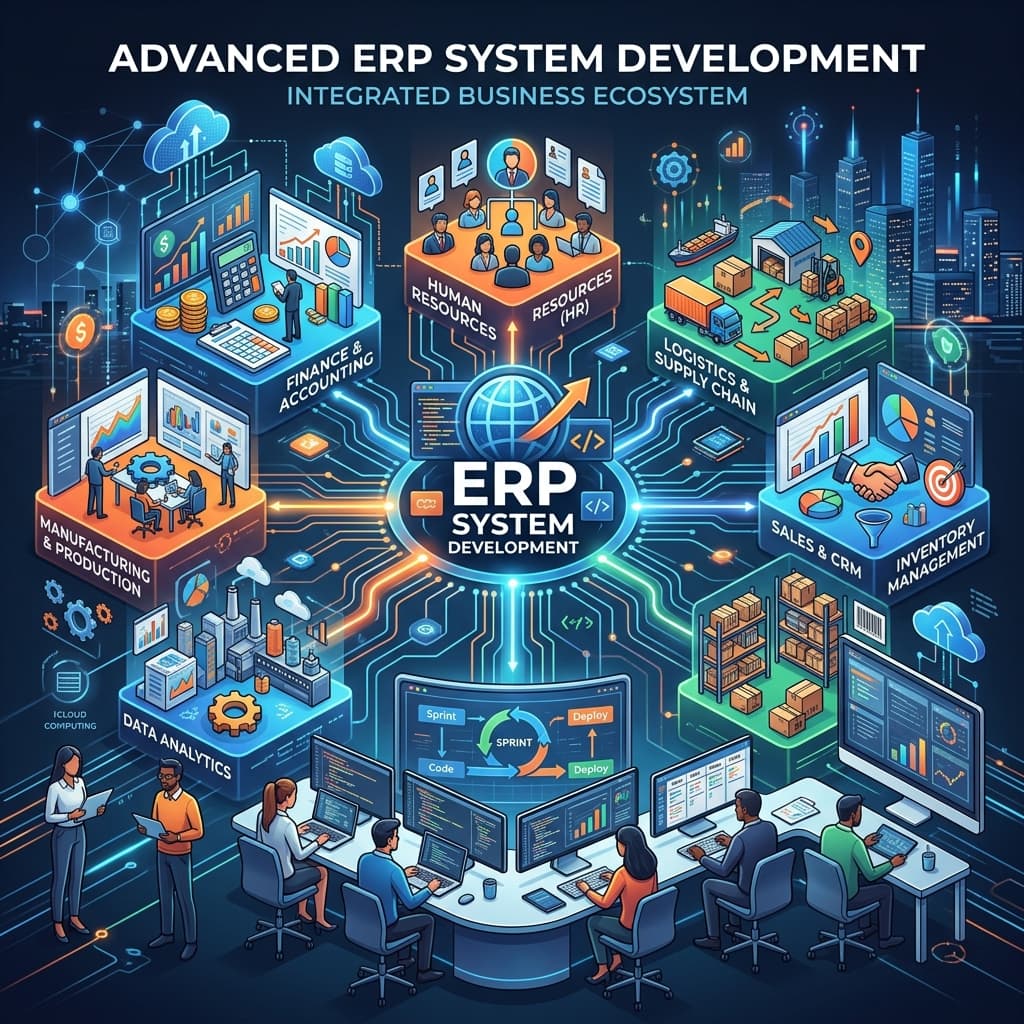
Mickiesoft built an end-to-end distribution and sales-force platform for an FMCG distributor in Sri Lanka: an Android app for van sales reps, a web back office for managers, and one API underneath both.
Every morning, an FMCG distributor loads vans, sends reps out on routes, and hopes the day's numbers add up by evening. Most of the time that depends on paper invoices, phone calls to the office, and a spreadsheet someone reconciles late at night. Stock goes missing between the warehouse and the van. Nobody knows which shops a rep actually visited. Overdue shops keep getting credit.
An FMCG distributor in Sri Lanka, running van sales across hundreds of retail outlets, asked us to replace that with one connected system. This is what we built.
One platform, three parts
| Part | Who uses it | What it does |
|---|---|---|
| Android field app | Van sales reps and delivery staff | Route stops, shop check-in, bookings, invoicing, payment collection, returns, van stock, shop registration and KYC |
| Web back office | Distributor managers, warehouse, finance | Catalogue and schemes, warehouses and stock, van loading, purchasing, sales reports, live fleet map |
| Central API | Both apps | Business rules, stock ledger, credit control, reporting, user roles and security |
A rep and a manager are always looking at the same numbers. When a rep invoices a shop, the van's stock drops and the sale shows up in the office reports without anyone re-typing it.
What it does in the field and in the office
Stock you can trust, from GRN to van
Goods arrive through a goods received note (GRN) and are tracked by batch and expiry date. Every receipt, transfer, adjustment and van load is posted to a stock ledger, so each movement has a document behind it. Stock is picked first-expiry, first-out (FEFO). Managers get expiry alerts and low-stock warnings before they become write-offs.
Each van is treated as a mobile warehouse. The system knows what was loaded in the morning, what has been sold, and what is still on board, at any moment of the day.
Proof that the rep was really at the shop
Every registered shop has a map pin and a geofence radius. When a rep checks in, the app records their GPS position and whether they are inside the shop's zone. Visits are logged with check-in and check-out times, so managers see real coverage instead of reported coverage.
Bookings, invoices and trade schemes
Reps take orders (bookings) and raise invoices on the spot. Trade schemes are applied automatically: buy-X-get-Y-free offers, slab discounts, trade discounts and bill-value discounts, each limited by channel (retail, wholesale or modern trade) and date range.
Credit control built into the route
Each shop has an approved credit limit in rupees. Before a rep sells on credit, the app checks the shop's outstanding balance and credit status. Payments are collected in the field, including cheques photographed with the phone camera.
Shop onboarding and KYC
New shops are registered from the field with trade name, channel, contact details, delivery address and location. The app captures the owner's NIC, business registration and food permit as photos, and the retailer signs the trading agreement on screen.
A live view of the fleet
The app sends each van's position, speed and status (on route, idle, at shop, returning) to the server. Managers see every active van on a map with its rep and remaining stock. For chilled goods, the van also reports cargo-bay temperature, and the system raises an alert when it leaves the allowed range for that van.
Market intelligence
Reps log competitor activity, POSM placements, new product launches, product complaints and trade spend. These feed into more than a dozen reports, including SKU-wise, shop-wise, territory-wise and item-wise sales, primary sales, slow-moving products, distributor stock and market share trends.
Built for Sri Lanka
The back office runs in English and Sinhala. Amounts are in LKR. The field app keeps working data on the phone, so a weak signal on a rural route does not stop the rep from working.
Under the hood
| Layer | Technology |
|---|---|
| Field app | Native Android in Kotlin with Jetpack Compose, Room local database, Hilt, CameraX, Google location services and OpenStreetMap maps |
| Web back office | Next.js 16 and React 19 with TypeScript, TanStack Query, NextAuth sign-in, next-intl (English and Sinhala) and Leaflet maps |
| API | C# on .NET, built in clean-architecture layers (domain, application, infrastructure, API) |
| Database | Microsoft SQL Server via Entity Framework migrations |
| Security | JWT access and refresh tokens, role-based permissions, secrets kept out of source code |
The API is versioned (/api/v1), so the Android app and the website can be released on their own schedules without breaking each other. Invoices are never deleted; they are reversed with balancing entries, so the books always reconcile.
Is your distribution business still running on paper?
Mickiesoft has been building software in Moratuwa since 2021. If your reps, vans and warehouse are not yet on one system, we can show you the platform running on real routes and adapt it to your products, schemes and territories.
Is your distribution business still running on paper?
Book a demo of the platform running on real routes, adapted to your products, schemes and territories.
Book a DemoPreguntas frecuentes
Encuentre respuestas a las preguntas más habituales sobre nuestros servicios, nuestro proceso y nuestras capacidades.