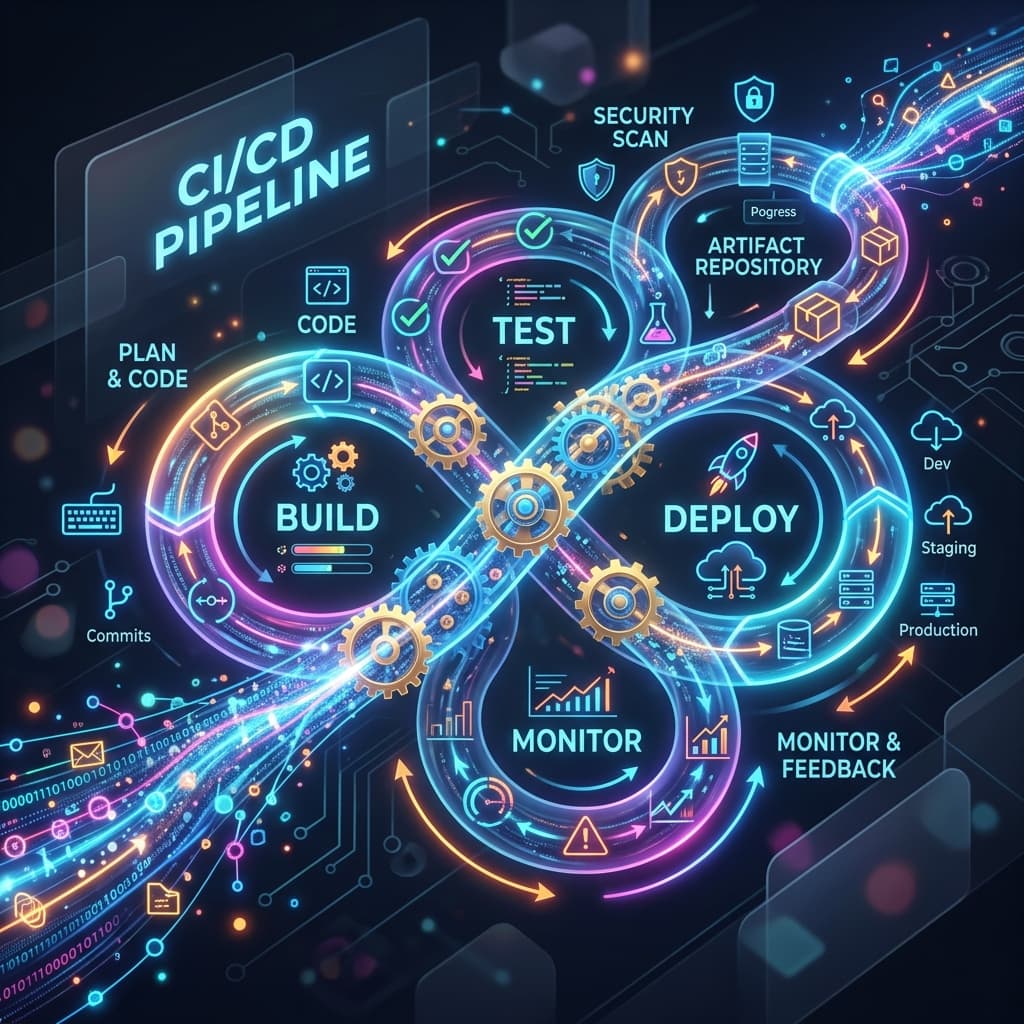
Mobile CI/CD with Fastlane and GitHub Actions

Introduction
Mobile CI/CD with Fastlane and GitHub Actions is one of the most discussed topics in mobile circles right now. Teams are adopting mobile CI/CD to ship faster, reduce operational risk, and deliver better user experiences.
This article explains what mobile CI/CD means in practice, why it matters in 2026, and how engineering leaders can evaluate signing, test flights, and store releases without over-engineering their stack.
Why It Matters Now
The technology landscape moves quickly. What was experimental last year is now a baseline expectation for competitive products. mobile CI/CD addresses real constraints: latency, cost, security, and maintainability.
Organizations that treat mobile CI/CD as a strategic capability—not a one-off experiment—tend to see compounding returns across delivery speed and system reliability.
- Faster iteration cycles with clearer architectural boundaries
- Improved observability and easier incident response
- Better alignment between product goals and technical implementation
- Reduced long-term maintenance cost through standardized patterns
Core Concepts
Before implementation, teams should align on vocabulary and constraints. At its core, mobile CI/CD is about signing, test flights, and store releases.
Successful adoption usually starts with a narrow pilot: one team, one service, and explicit success metrics such as deployment frequency, error rate, or p95 latency.
Architecture Patterns
Most production architectures combine mobile CI/CD with existing platform investments rather than replacing everything at once.
A pragmatic approach keeps the control plane simple, isolates blast radius, and documents decision records so future teams understand trade-offs.
- Start with a reference implementation and golden-path templates
- Define ownership boundaries between platform and product teams
- Introduce automated checks in CI/CD before production rollout
- Measure outcomes weekly and adjust scope based on evidence
Implementation Guide
Rollout should be incremental. Begin by mapping current workflows, identifying bottlenecks, and selecting one high-impact use case where mobile CI/CD provides immediate value.
Instrument everything from day one: traces, structured logs, and business-level KPIs. Without measurement, it is difficult to justify wider adoption.
// Example: baseline integration pattern
const config = {
  service: "mobile-ci-cd",
  environment: process.env.NODE_ENV,
  observability: { traces: true, metrics: true },
}

export async function bootstrap() {
  // Initialize adapters and health checks
  await validateDependencies(config)
  return { status: "ready", focus: "signing, test flights, and store releases" }
}
Best Practices
Mature teams treat mobile CI/CD as an operational discipline, not only a tooling decision. That means runbooks, on-call readiness, and security review are part of the launch plan.
- Keep interfaces stable and version external contracts
- Use feature flags for safe rollout and fast rollback
- Automate compliance checks and dependency updates
- Invest in developer documentation and internal workshops
Common Pitfalls
The most common failure mode is adopting mobile CI/CD for hype rather than fit. Another frequent issue is skipping enablement—teams get tools without training or ownership.
Avoid big-bang migrations. Parallel runs, shadow traffic, and migration dashboards reduce risk while preserving business continuity.
Conclusion
mobile CI/CD is no longer optional for teams building modern software at scale. With a focused rollout, clear metrics, and strong platform support, signing, test flights, and store releases becomes a durable advantage.
Start small, measure impact, and scale what works. The teams that learn fastest will define the next generation of mobile best practices.
Need help implementing this?
Mickiesoft engineers can help you design, build, and scale modern software solutions.
Contact Us